Constructing a quality CV

This post features our advice on how to create an excellent CV and will also include information on CareerSet, an online platform dedicated to offering CV support and feedback.
Here we answer some of the most commonly asked questions about CV writing.
Why should I write a CV?
No matter what job you are applying to, you will likely need to supply a CV during the initial stage of the application process. Employers usually expect to have many applications for their roles, and since they cannot interview everyone, they use CVs to determine who will be a good fit for the job.
The purpose of constructing a CV is to impress an employer, demonstrate your capabilities, and advance in the application process. It’s vital to be clear, concise and professional in your CV, as you want to make a good first impression on a recruiter and present your skills and experience in the best light.
A strong CV allows you to keep an organised record of your qualifications and experiences and provides you with information which you can use as a reference point in interviews to help you answer questions.
How should I structure it?
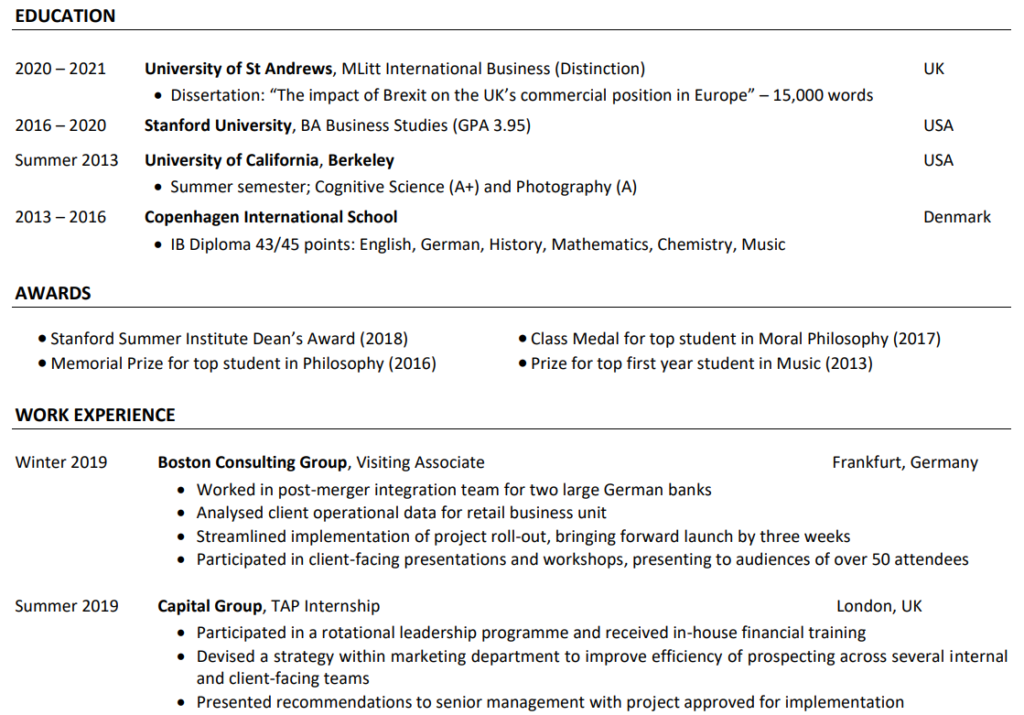
It is a good idea to keep your professional CV to a maximum of two pages, while an academic CV aimed at applying for postgraduate study can be longer than this and more detailed. You want to create a CV that looks orderly, well-presented, and highlights the most relevant information about you.
You should look to incorporate information in separate sections, labelling each one clearly, and being consistent with font sizes, dates, and punctuation throughout.
Prioritise your roles and experiences which are most applicable to the job you are applying for, which may mean including your most recent position first and adopting a reverse chronological structure.
What content should I include in my CV?
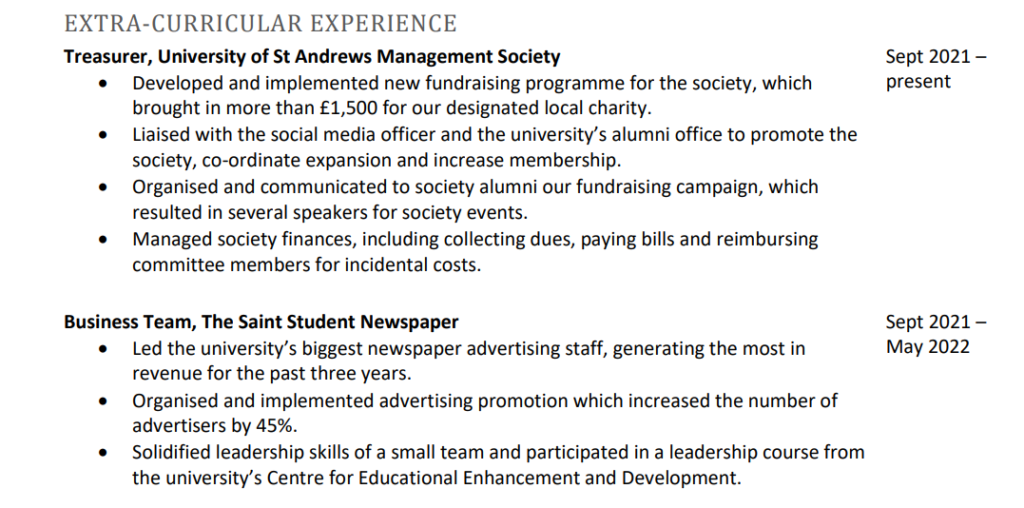
- Use a few short bullet-points per section to specifically describe what you have done and what the outcome was.
- Start these bullet points with strong action verbs which allow you to be direct and illustrate your main responsibilities and achievements.
- Always keep the job description in mind and aim to exemplify the key skills that the employer is looking for.
You could mention the tasks that you completed, the projects you worked on, and anything you achieved during your time in the role. If possible, try to quantify your examples, by including numerical information that will provide scale to your successes.
You can also include details of the positions you have carried out as part of a university society or sports club, as long as you demonstrate the transferable skills you have developed within these posts such as leadership, communication, and organisation.
What does not need to be included?
From a narrative point of view, you do not need to include ‘I’ in your CV and should write in the third person for the best result. The general idea is to be as direct and impactful with your words as possible, so focus less on describing a role and more on the actions you took and the outcomes you delivered.
You do not need to disclose personal information such as age, nationality, religion, gender or sexual orientation as these are protected characteristics which should not influence your ability to do a job.
Unless specifically asked for, there is also no need to include details of referees on your CV.
Should I regularly update my CV?
Yes, you should always update your CV whenever you start a new role or gain further experience. Try to keep your CV as up to date as possible, which may mean removing some older information which is no longer as relevant.
It can be helpful to draft a master CV which holds every detail of your academic and professional experience, from which you can then create tailored CVs for each new role you intend to apply for.
The Careers Centre can help you no matter what stage you are at in your CV preparation. You can book an appointment with one of our CV advisers for one-to-one CV advice any day of the week.
You can also use CareerSet, an online CV checker through which you can upload a copy of your CV and receive instant, detailed feedback on its strengths and areas of improvement needed.
Current students can sign-up using their university email address, while alumni should sign-up using their personal email address by entering an access code – please email [email protected] to request the code.