Employability Bursary: Jessica Westworth

Jessica shares how the Employability Bursary helped her complete a fisheries-related internship.
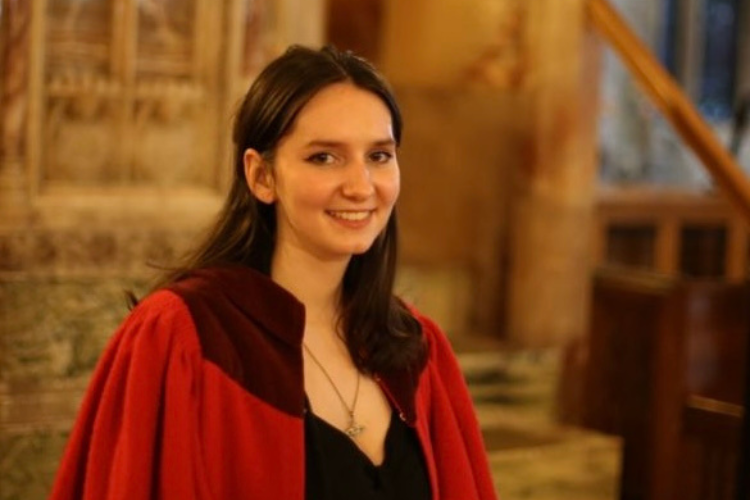
What did you use the Employability Bursary for?
The Employability Bursary award allowed me to complete an internship with Anne Magurran and Georg Engelhard on the changes in catch per unit effort (CPUE) of Haddock in the North Sea from 1901-1937 using D’Arcy Thompson’s data held at the St Andrews archives. The employability bursary allowed me to cover financial expenses that would have had to been otherwise covered by a part-time job working most likely in hospitality. By receiving the funds I was able to work in my future field of interest: fisheries biology. The work I have done in the internship has now lead to us possibly publishing a paper which I am currently writing with the intent to submit to the journal of fish biology.
How did you find out about this opportunity?
In all honesty I did not find out about the experience that I utilised the Employability Bursary for, I worked really hard and had a lot of help from different individuals in making a project for myself. I contacted Andrew Brierley during the summer of my first year about being interested in fisheries science and he put me in touch with a PhD student of his Thrandy Hudgins. I went on to work with Thrandy for a year on his project in my second year at university, looking at the D’Arcy Thompson data and which data was reliable and could be further analysed. Thrandy’s project focus shifted slightly away from the D’Arcy Thompson files which I had been reviewing so he put me in touch with Anne Magurran to see if I could continue the project under her supervision. The project shift with Anne Magurran moved towards an exploring specific species size distribution and how it had changed overtime using the data in D’Arcy Thompson’s archive files. Anne then contacted Georg Engelhard, who also joined on as one of my mentors on the project. This all lead to us investigating how haddock abundance measured as a proxy of CPUE had changed between the time period of 1901-1937.
Why did you choose this opportunity, and how does it support your future goals?
I wanted to pursue this opportunity because it was in my field of interest. I am very interested in studying how current and past fishing practices are affecting ecosystem functioning. This internship came with the prospect of getting to explore the effect of historic fishing practices on the abundance and size distribution of a species.
What did you gain from the experience, and how has it helped your employability?
I absolutely loved working with Anne Magurran and Georg Engelhard. I loved being able to work in my field of interest and expand my knowledge on historic fishing impacts on the North Sea. I wanted to pursue this opportunity as it allowed me to learn about changing fishing dynamics from a historic time period for which we have very limited reliable data. We hoped to explore how early fishing pressures had altered the haddock abundances and size distributions, and found some extremely revealing results about early fishing pressures from the early 1900s. This opportunity was beneficial to my future ambitions as I hope to work at DEFRA or CEFAS in the future, and I believe this internship set me up for that. It gave me a much deeper understanding of fishing effect on fish community structure as well as the statistical methods I may use at future scientific research. It also gave me valuable work experience I can apply to future positions. Hopefully as I continue to work on the project through June/July/August, we will have a published paper with the work we completed. Suffice to say, I truly believe this opportunity has absolutely improved my personal employability.
What advice would you give to other students thinking of applying for the Employability Bursary?
I would say as a student who is interested in ecology it is so difficult to find funding for work within your field of interest, and that work experience is so vital to future employability. The Employability Bursary gave me the opportunity to work in my field of interest and has improved my employability for future paid experiences/internships/work. For future students interested in applying I would say, you absolutely should apply. It is rare to get such a generous grant of money and gain such amazing work experience, so not only should you apply for it, but if you do end up receiving the Employability Bursary, put as much effort as you can into the opportunity!